

 See My Latest Article on HelloNation
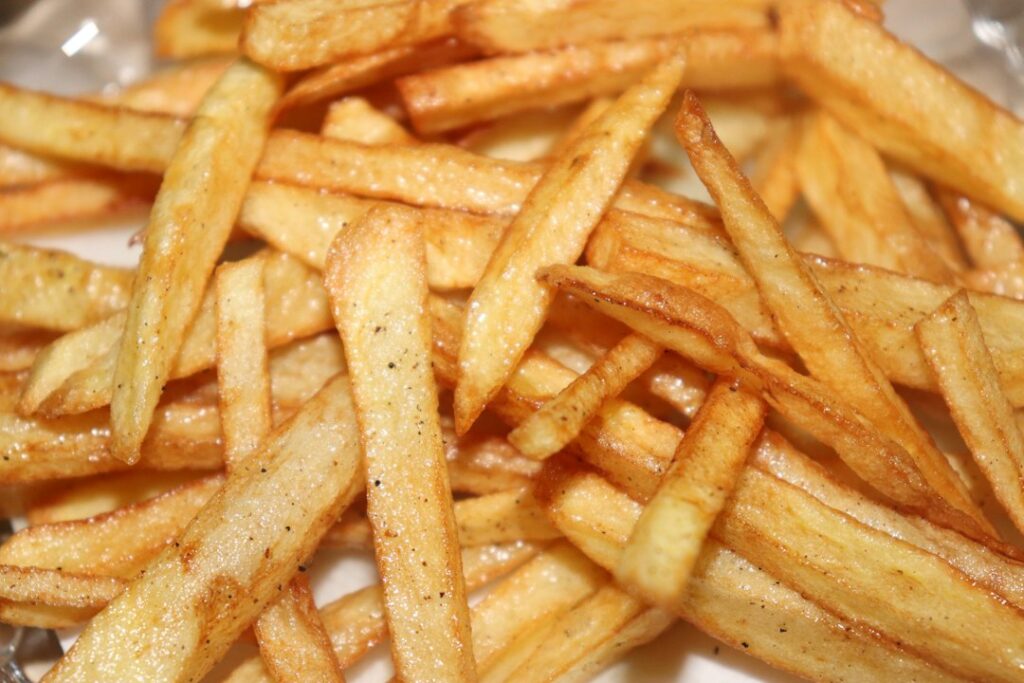
What makes French fries crispy?
Perfectly crispy French fries have a dry, firm exterior and a tender center. That texture comes from controlling three things: moisture, starch, and cooking temperature.
Potatoes contain a large amount of water. During frying, some of that water must escape before the outside can become crisp. If the oil is too cool, the potatoes absorb more oil and turn soft. If the pieces are crowded together, steam becomes trapped and prevents browning.
The most dependable method is a two-stage fry:
- Cook the potatoes gently at a lower temperature to soften the centers.
- Fry them again at a higher temperature to crisp and brown the exterior.
This approach works for both home kitchens and restaurant-style preparation.
Which potatoes produce the crispiest fries?
High-starch potatoes generally create the lightest, crispiest fries. Russet potatoes are a practical choice because they contain less moisture than waxy varieties and develop a fluffy interior.
For fries with a denser, creamier center, yellow-fleshed or all-purpose potatoes can work, but they may not become quite as crisp. Waxy potatoes tend to hold their shape well, yet their higher moisture content can produce a softer surface.
Choose potatoes that are firm, dry, and free from green areas, deep bruises, or extensive sprouting. Store them in a cool, dark, dry place rather than in the refrigerator. Very cold storage can encourage unwanted sweetness and cause the fries to brown too quickly during cooking.
In a cool-weather community such as Chippewa Falls, WI, pantry conditions can vary widely between heated homes, basements, and garages. A consistently cool indoor cupboard is usually more reliable than a location exposed to freezing temperatures.
How should potatoes be cut and prepared?
Cutting the fries evenly matters because pieces of different sizes finish at different times. Aim for sticks approximately one-quarter to three-eighths of an inch thick. Thinner fries crisp quickly but can dry out, while thicker fries need more time to cook through.
After cutting, rinse the potatoes in cold water. This removes some surface starch, which otherwise can make the fries stick together and form a heavy coating.
For a cleaner texture, soak the cut potatoes in cold water for at least 30 minutes. Several hours of soaking can also work if the potatoes remain refrigerated. Drain them thoroughly, then dry them with clean kitchen towels.
Drying is not an optional detail. Water on the surface can cause dangerous oil splattering and lowers the oil temperature. Spread the potatoes out and blot until they feel dry rather than slick or wet.
A useful preparation sequence is:
- Cut the potatoes as evenly as possible.
- Rinse away loose starch.
- Soak in cold water if time allows.
- Drain completely.
- Dry thoroughly before the first fry.
What oil temperature is best?
For a two-stage method, heat the oil to about 300°F to 325°F for the first cooking stage. The potatoes should soften and cook inside without developing much color.
After draining and resting, raise the oil to approximately 350°F to 375°F for the second stage. The hotter oil quickly firms the exterior and encourages even browning.
A cooking thermometer is more dependable than judging by appearance. Oil temperature drops when cold potatoes are added, especially if the pot is small or overloaded. Allowing the oil to recover between batches helps maintain consistent results.
Neutral oils with relatively high smoke points are generally suitable. The oil should smell fresh and should not foam excessively or produce smoke during normal heating. Never leave heated oil unattended.
Why does frying in batches improve texture?
Overcrowding is one of the most common reasons fries turn limp. Adding too many potatoes at once causes the oil temperature to fall sharply. The potatoes then release steam into an already crowded pot, creating a humid environment instead of a crisping one.
Cook small batches with enough space for the potatoes to move freely. The oil should surround the pieces rather than leaving them packed in a solid layer.
After the first fry, transfer the potatoes to a wire rack or a tray lined with absorbent paper. Avoid stacking them deeply, because trapped heat and steam can soften the surfaces.
The same rule applies to the final fry: remove the finished potatoes promptly and spread them out. Fries kept in a covered bowl will steam themselves soft.
Should French fries be double-fried?
Yes, double-frying is usually the most reliable route to crisp fries. The first fry cooks the interior, while the second fry focuses on surface texture and color.
During the first stage, the potato structure softens and moisture begins moving toward the surface. A short rest allows steam to escape. During the second stage, the hotter oil dehydrates the outer layer and creates a crisp crust.
For thicker fries, the first cooking stage may take several minutes. The potatoes should be tender enough to bend slightly but not so soft that they break apart. The second fry is usually shorter and should continue only until the fries reach a light golden to medium golden color.

Freezing the fries between stages is optional. It can produce a firm texture, but it requires extra freezer space and careful handling to prevent pieces from clumping together.
How should fries be seasoned?
Season fries immediately after the final fry, while a thin film of oil remains on the surface. Salt adheres better at that moment than after the fries have cooled.
Use a light, even sprinkle rather than adding a large amount at once. Fine salt distributes well, while coarse salt provides a more noticeable crunch but may not spread evenly.
Additional seasonings can include black pepper, paprika, garlic powder, or dried herbs. Add powdered seasonings sparingly because they can burn or become bitter if added directly to very hot oil.
Salt should not be added during soaking. It can draw moisture toward the surface and may interfere with the texture if used heavily.
What common mistakes make fries soggy?
Several problems can undermine otherwise careful preparation:
- Skipping the drying step: Surface water creates steam and causes splattering.
- Using oil that is too cool: The potatoes absorb more oil before the crust forms.
- Overfilling the pot: A sharp temperature drop leads to pale, greasy fries.
- Serving immediately from a covered container: Trapped steam softens the crust.
- Cutting uneven pieces: Small fries may burn while thick pieces remain undercooked.
- Leaving fries in the oil too long: Excessive browning can produce a dry or bitter flavor.
- Using old or overheated oil: Oil can develop stale aromas and transfer unpleasant flavors.
Dark brown fries are not necessarily crispier. Browning should be controlled, with the goal of a firm surface and a cooked, fluffy center rather than a deeply scorched exterior.
Can fries be made crisp in an oven or air fryer?
They can, although the texture differs from deep-fried potatoes. Oven fries need a dry surface, enough space on the pan, and a hot cooking environment. Arrange them in a single layer and turn them during cooking so the exposed surfaces brown more evenly.
An air fryer can produce crisp results with less oil, especially when the potatoes are cut relatively thin and cooked in small batches. Shaking the basket helps redistribute the pieces, but overloading still causes steaming.
In either method, soaking and drying remain useful. A light coating of oil improves browning, while excessive oil can make the exterior heavy rather than crisp.
For households managing winter cooking conditions, countertop methods may be convenient because they avoid handling a large pot of hot oil. Deep frying, however, generally produces the most consistent restaurant-style crust when temperature and batch size are controlled carefully.
How can finished fries stay crisp for serving?
Serve fries as soon as possible after seasoning. If they must wait briefly, place them in a single layer on a wire rack in a warm oven, leaving enough ventilation for steam to escape.
Avoid covering them tightly with foil or placing them in a deep bowl. Both methods trap moisture. If preparing food for several people, it is better to finish fries in smaller rounds than to cook one oversized batch and let it sit.
The best texture comes from a simple sequence: use a suitable potato, cut evenly, rinse or soak, dry completely, fry gently, rest briefly, fry hot, season immediately, and serve uncovered.